
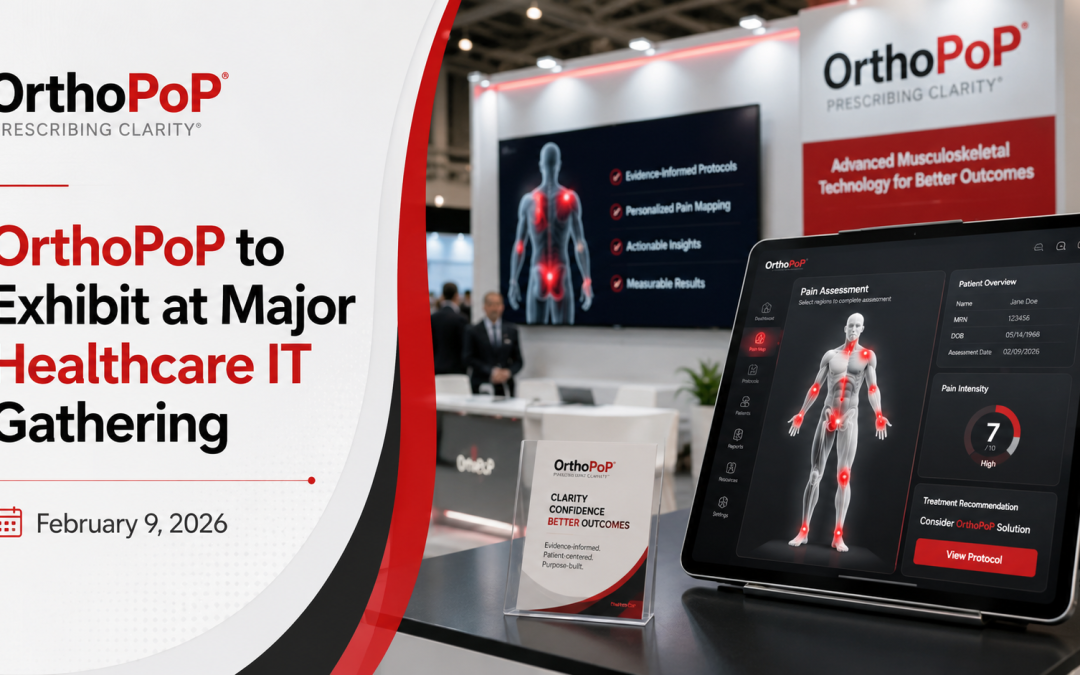
OrthoPoP to Showcase Its Musculoskeletal Intelligence Platform
OrthoPoP will exhibit at a leading health information and technology gathering in Las Vegas, where healthcare professionals, technology leaders, innovators, and executives will explore the latest developments in digital health.
During the event, the OrthoPoP team will demonstrate how its platform helps patients and care teams better understand musculoskeletal symptoms before the clinical encounter begins.
The platform combines structured patient intake, interactive anatomical tools, specialist-authored clinical pathways, and educational resources to help identify relevant symptoms, possible red flags, and appropriate next steps earlier in the patient journey.
Designed to Improve the Start of Care
OrthoPoP is built to help healthcare organisations improve the information available before scheduling, imaging, referral, and treatment decisions are made.
Key platform capabilities include:
- Interactive pain-point and regional pain mapping.
- Specialist-informed condition matching.
- Red-flag screening questions.
- Condition-appropriate imaging, laboratory, and referral guidance.
- ICD-10 code references.
- Patient education and summary reports.
- Structured information that can support intake and medical-record workflows.
The company plans to discuss potential pilot programmes with healthcare providers and organisations interested in improving musculoskeletal intake quality, reducing avoidable callbacks, and creating more efficient clinical workflows.
Exploring New Healthcare Partnerships
The event will also give OrthoPoP an opportunity to meet potential healthcare and technology partners as the platform continues to develop.
According to the company’s announcement, OrthoPoP intends to explore partnerships that can support patient-input tools, electronic medical-record integration, and broader adoption of its musculoskeletal decision-support technology.
About OrthoPoP
OrthoPoP is a clinician-designed musculoskeletal decision-support and education platform. It helps patients and care teams identify relevant symptoms, recognise potential red flags, and better understand possible next steps before the normal intake process is complete.